
S. Vaiyapuri Pillai - His pen preserved what time could have forgotten !!
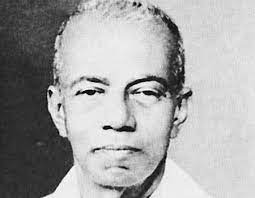
S Vaiyapuri Pillai (12 October 1891 – 17 February 1956) was a renowned lawyer and Tamil scholar. Vaiyapuri Pillai was born in 1891 to Saravanapperumal Pillai and Pappammal in a Saiva Vellalar family in Tirunelveli District.

Education:
After graduating in 1912, he studied law and practised as a lawyer in Trivandrum and Tirunelveli from 1915 to 1926. He also attended St Xaviers school and Madras Christian college. An advocate by profession, he edited and published several Tamil classics from original manuscripts.

He is best remembered as the editor of the Tamil lexicon published by the Madras University in the 1920s. He was a voracious reader and had in his own private collection thousands of books in Tamil, English, Sanskrit and Malayalam. His collection also included hundreds of palm-leaf manuscripts.
Tamil Lexicon:
On November 25, 1926, Pillai was appointed editor of the Tamil lexicon committee of the Madras University.

Until then, Volume I of the lexicon and the first part of Volume II had been published over a span of fourteen years. But once Pillai took over, the remainder of the lexicon which comprised six volumes was completed in just ten years.
Kamban Kazhagam:
While residing in Nellai (Tirunelveli), he collaborated with T.K. Chidambaranatha Mudaliar to establish the Kamban Kazhagam in Tirunelveli. Eminent figures like M.P. Somu, Justice M.M. Ismail, Prof. A. Srinivasa Raghavan, and Bhakshiraj Iyengar were actively involved in the organization. The Kazhagam critically edited and published a version of the Kambarāmāyaṇam that had been previously brought out by M.S. Rajam Publishers, correcting errors and standardizing textual variations.
Literary Circles and Friendships :
From his student days, S. Vaiyapuri Pillai was closely connected with the leading scholars of Tamil’s renaissance era, engaging in correspondence and intellectual exchange. Though memoirs describe him as a man of few words—quite the opposite of Kavimani Desika Vinayagam Pillai, known for his eloquence—Vaiyapuri Pillai maintained a wide circle of scholarly friends in every city he lived in, including Thiruvananthapuram, Tirunelveli, and Chennai. He took active interest in literary organizations and eagerly participated in critical discussions and debates. To understand Vaiyapuri Pillai rightly, one must view him as part of a collective of intellectuals—those who surrounded him and those whom he nurtured. More often than not, he stood as the central pillar of that scholarly constellation.
Controversies :
In June 1940, the government of Madras Province appointed a committee headed by V. S. Srinivasa Sastri to frame general principles for coining words for scientific and technical terms in Tamil. The constitution of the committee was opposed by Tamil purists who felt that Sastri was strongly anti-Tamil. Sastri precipitated matters further by recommending the inclusion of Vaiyapuri Pillai, who was also perceived to be anti-Tamil. The committee eventually recommended the retention of words of English and Sanskrit origin. Vaiyapuri justified the decision as a necessity for promoting national integration and cited the poetry of Manonmaniam Sundaram Pillai. The decisions of the committee were opposed tooth and nail by activists of the Madras Presidency Tamil Sangam and were eventually reversed after Sastri's death in 1946.
Literary Works:
In February 2009, the Tamil Nadu state government announced that the works of 28 scholars would be nationalised and the literary critic, Vaiyapuri Pillai's works were among them. In his budget address, finance minister K. Anbazhagan said compensation would be paid to the legal heirs of the authors having regard to the number of books written by them, their social impact and literary value. With a view to ensuring that the views and thoughts of great Tamil savants who dedicated their lives to the language benefitted the present and future generations, the government implemented the nationalization scheme.
Honours and Recognition:
For his outstanding work on the Tamil Lexicon project, S. Vaiyapuri Pillai was conferred the title of "Rao Sahib" by the British Government.
In 1953, the Tamil Writers’ Association honoured him in a special felicitation ceremony held under the auspices of the then Governor.
Last Years:
From 1951 to 1954, Pillai served as Honorary Professor of Tamil at the University of Travancore in Trivandrum. Retiring in 1954, he returned to Madras city where he died on 17 February 1956.
Memorial Works :
Many have written about the life and legacy of S. Vaiyapuri Pillai.
-
Sarojini – "Vaiyapuri Pillai Vaazhkai Kurippugal" (Biographical Notes on Vaiyapuri Pillai, 1957)
-
Thangammal – "En Thandhaiyar Perasiriyar S. Vaiyapuri Pillai" (My Father, Professor S. Vaiyapuri Pillai, 1991)
-
Ramasundaram – "Perasiriyar Vaiyapuri Pillai", published by the Sahitya Akademi as part of its Indian Literary Portraits series.
S. Vaiyapuri Pillai – The quiet architect of Tamil’s literary renaissance.
Comments
No comments yet. Be the first to comment!